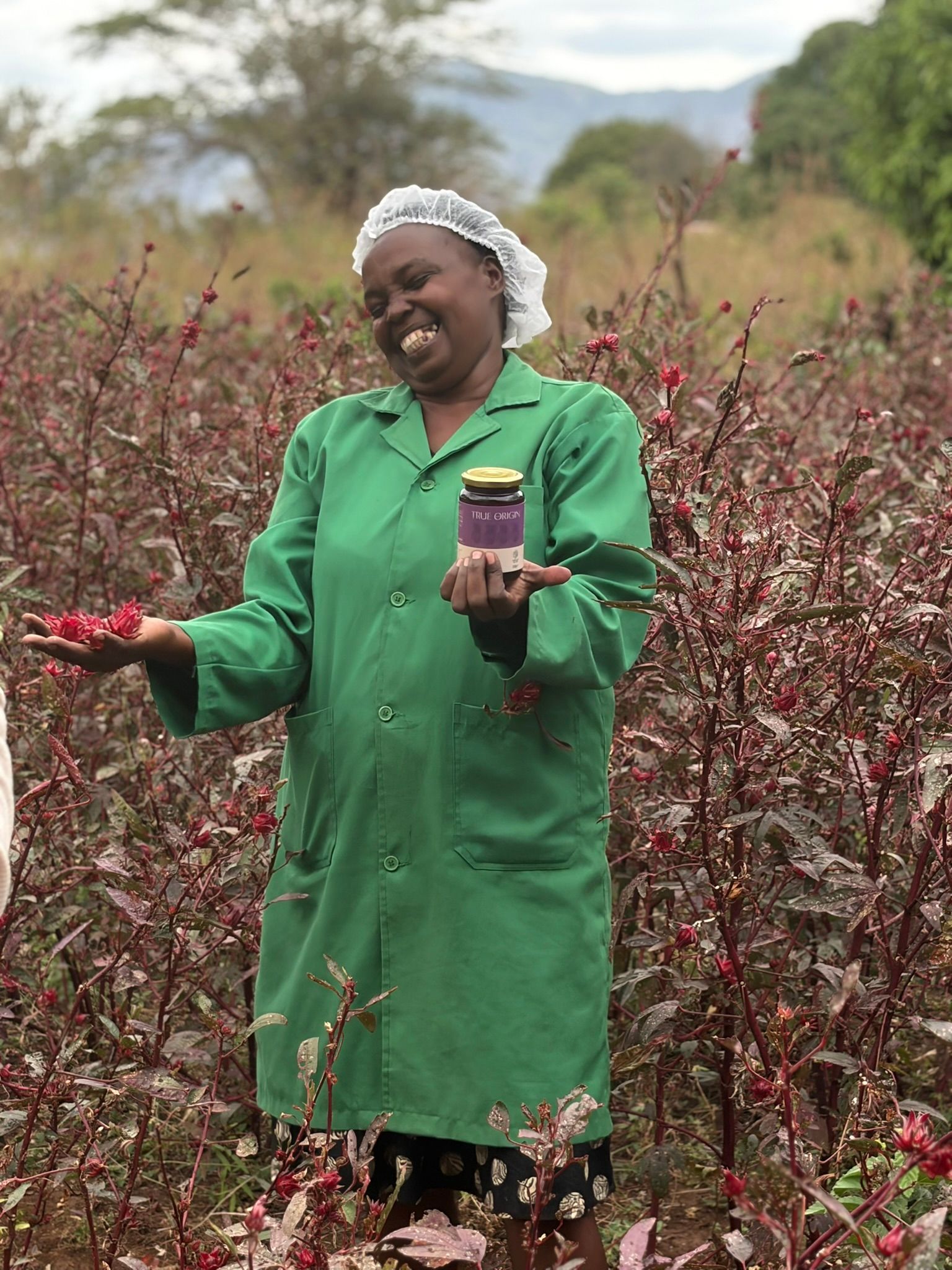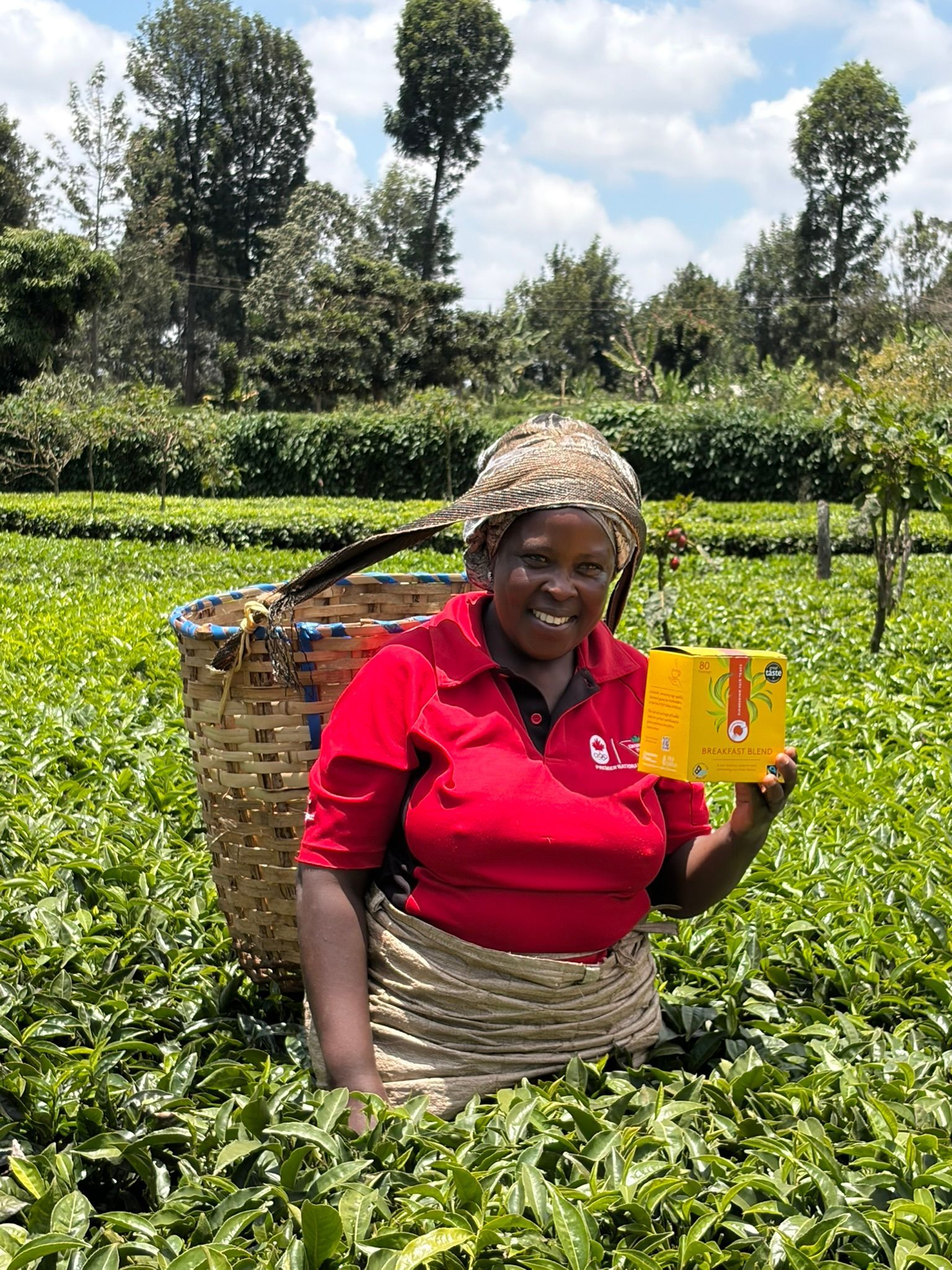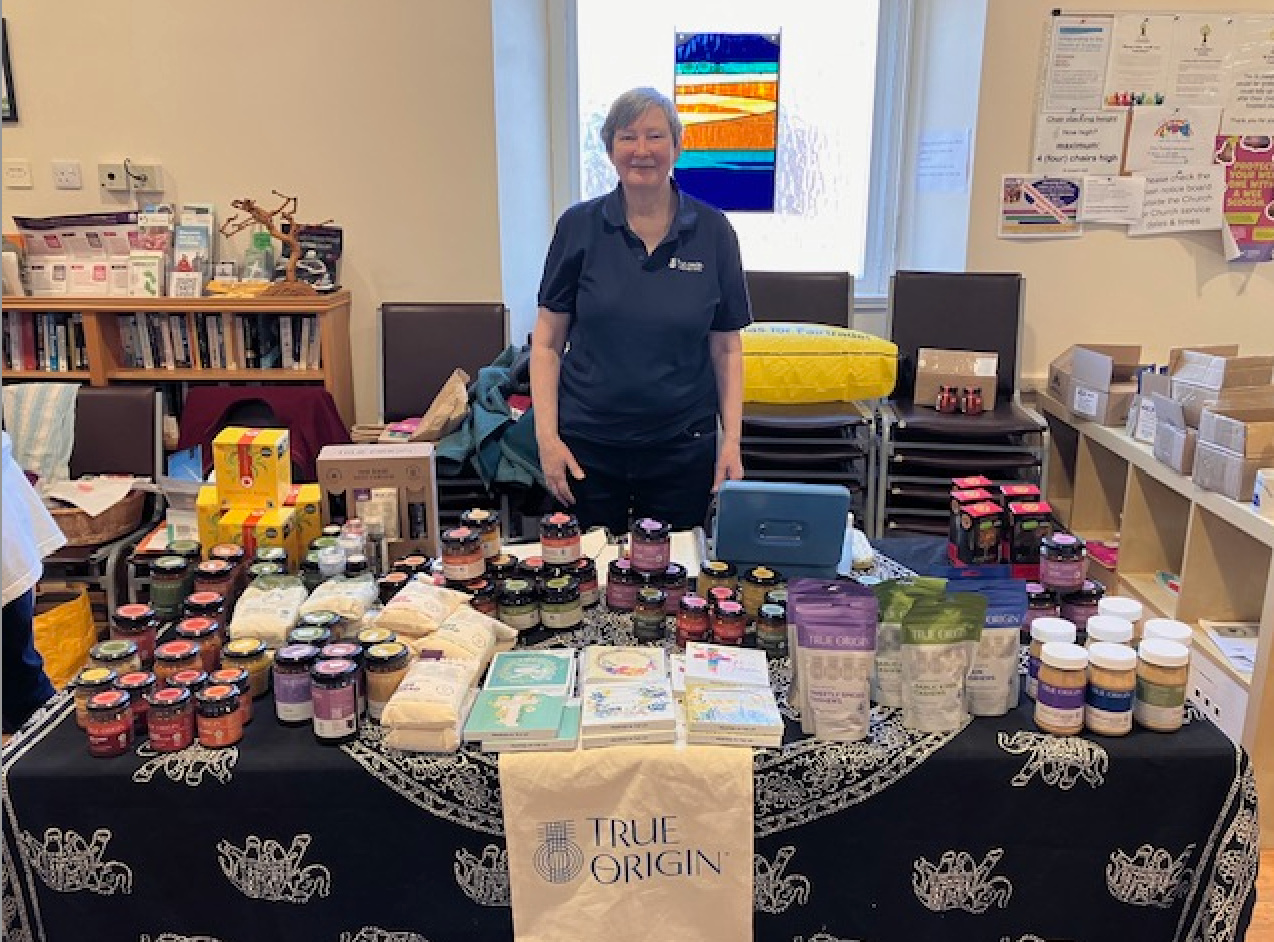

Meet a few producers from Meru Herbs, Kenya
Creating sustainable livelihoods through fair trade

Angelica Kaabara – Producer and Head of Meru Herbs Ecolodge
After completing my education at Materi Girls High Schoolin 1991,I was lucky enough to start working at the neighbouring Meru Herbs Project which at that point only had a tea factory concentrating solely on hibiscus. In 1992 we had a volunteer by the name of Franco who introduced us to jam making and I was selected to head the Jam Factory. When we first began, we prepared the jam in simple cooking pots as we did not have a factory and so all the cooking took place outside. We were quickly able to build a factory that was much more hygienic and well equipped to handle our increasing orders.
Today we prepare more than 100,000 jars of assorted jams and sauces which for me is a great achievement considering our humble beginnings.
Apart from being a worker at the Meru Herbs Project, I am also a Meru Herbs organic producer. I was among the first 43 farmers to get organically certified.
MY ACHIEVEMENTS
I feel very fortunate to be an employee and farmer for Meru Herbs as it has allowed me to achieve and benefit a lot. It is the main source of income for my household and I have benefited from the bursary fund which has enabled me to educate my two children. I have also been a recipient of the Women’s Bicycle Project which provides my only mode of transport.
I have been able to produce food both for my family and also to sell through fair trade partners which ensures the health of my family and allows me to give back to my community and help other farmers. I am very proud to be an employee of Meru Herbs as I have seen the project from its humble beginnings to where it is now. I have also had the opportunity to travel to Italy and South Africa for food shows.
I have also taken leadership positions by heading the Meru Herbs Jam Factory until 2018. I was promoted to head the recently completed Meru Herbs Ecolodge in August 2018. I am proud to be associated with the project which is a source of great pride to the people in the area.Evangeline Kawira – Meru Herbs Producer since 1995

During my time as a mango farmer, I have seen a lot of
fruit go to waste. This is because most of the farmers around this area have mangoes and so once you have sold a few in the market there was still a lot of fruits left over which went to waste. Therefore I am delighted to have been supplying fruits
to Meru Herbs since 1995, they use the mangoes to cook jam and us farmers were so happy because there was value added to the fruits and
now we could harvest and sell the fruits instead them being wasted. This has
provided additional income for me. I am married with four children. Three boys
and one girl who I have managed to educate to university level. I have used the
income from my sales to educate my children and improve my living conditions.
My appeal to our fair trade buyers is to continue buying our products because
the more they buy the more fruits we will supply to Meru Herbs to make the
fruit jam.
MATHEW KAJIWE – Meru Herbs Producer since 2004

I have been farming carcade
(hibiscus), lemongrass and chamomile for Meru Herbs since 2004 for them to use in their teas and jams. I was in the second group that converted to organic farming so
I now grow these herbs without the use of any fertilizers, pesticides or chemicals.
Being a producer to Meru Herbs has provided me with enough of a sustainable income to allow me to open a shop near my home as an extra source of income for my family. I have a wife Margaret Kajiwe and two children aged 11 years and 8 years. I
believe that the more our fair trade partners buy from us the more the farmers
will benefit from the sale of organic produce.
Florence Nkirote – Producer and employee of Meru Herbs since 2004

I began working at the Meru
Herbs Project after finishing school. I started working at the jam factory. Later
I had training at the Kenya Institute of Organic Farming (KIOF) and started
working in the Agriculture Department. I am passionate about Organic Farming
and I enjoy working with the growers group.
I have been able to support my family with the income from the produce
and also as an employee of Meru Herbs. I am a mother to a three year old
daughter and I hope to educate her to the best of my ability. I have had a
chance to travel to Italy which was a great moment for me to understand how the
whole value chain works. It was a great joy to be able to see our Meru Herbs
products at the international shops where our final customers access them. I am very grateful to those people who buy our Meru Herbs products and help us make a better life for our families and ask that you continue to buy them. Thank you.