
Jade and Nicola Visit some Eswatini Farmers

Nicola Taylor • October 2, 2024

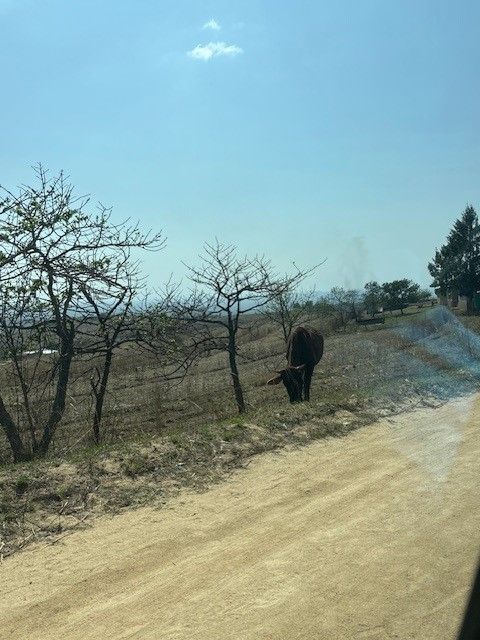
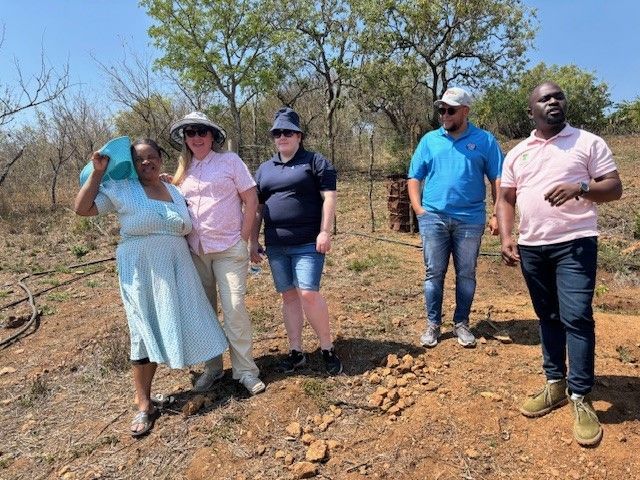
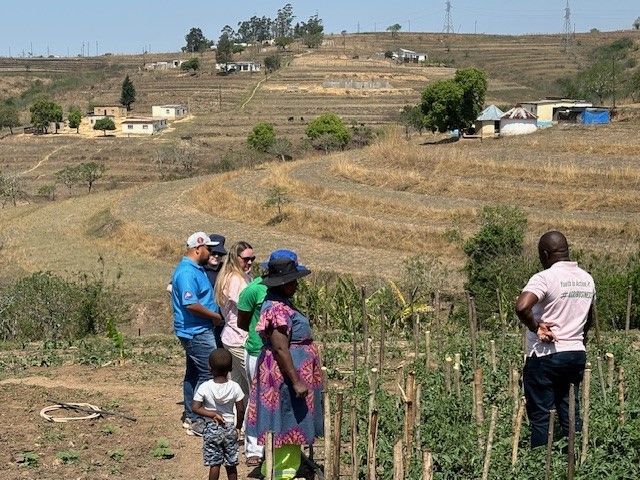
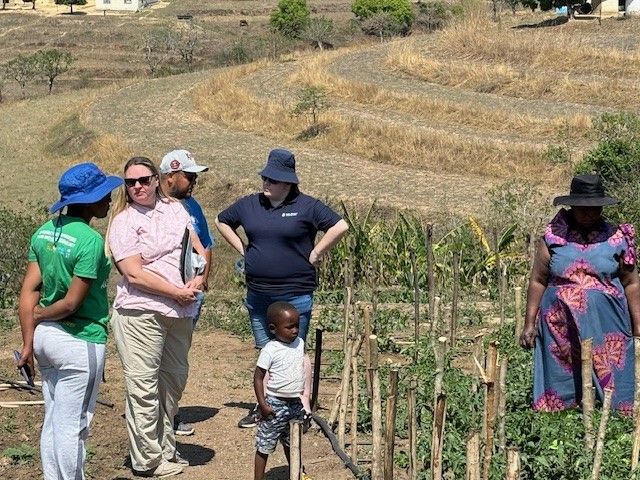
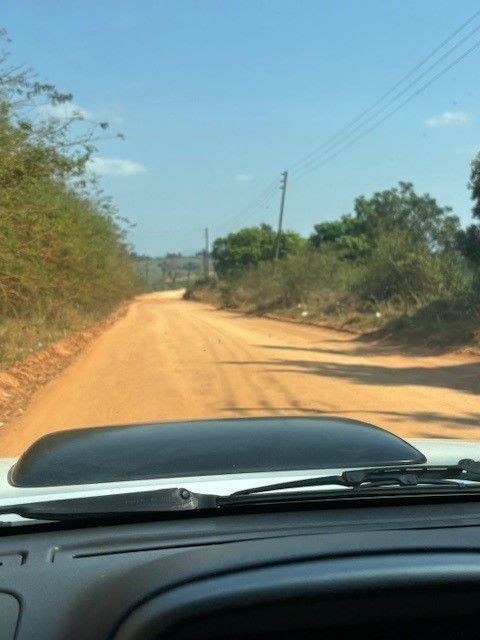
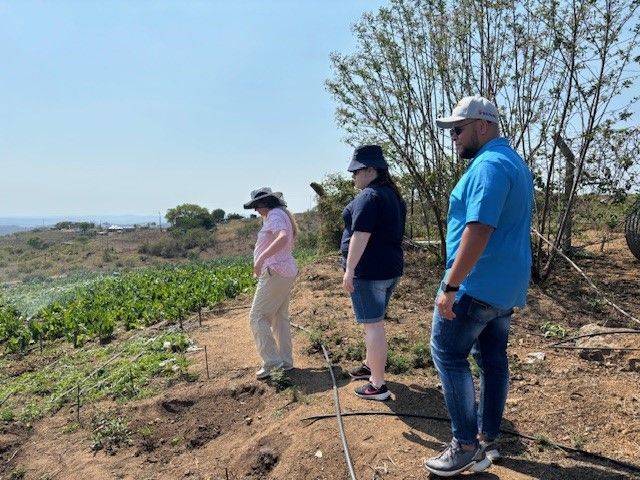
This morning we made up way up to the Eswatini hills to visit three farmers who are part of the Woman Farmer Foundation. We drove up dirt tracks and quite often ‘off the beaten track’ for quite some time in order to reach the first farm. However, we did get beautiful views of the surrounding countryside and sometimes had to wait until the cows and goats finished crossing the road before we could pass.
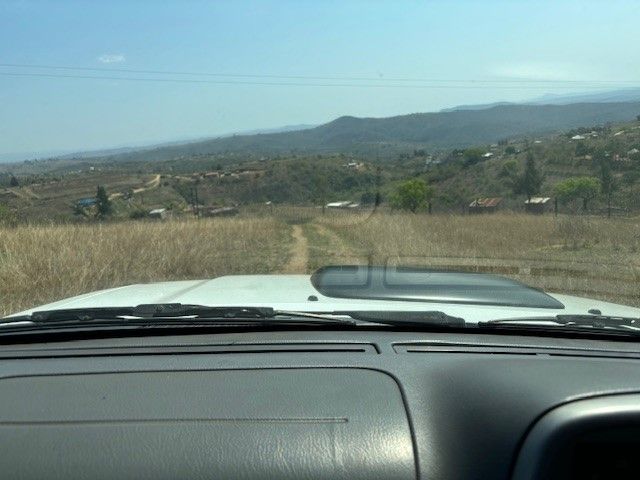
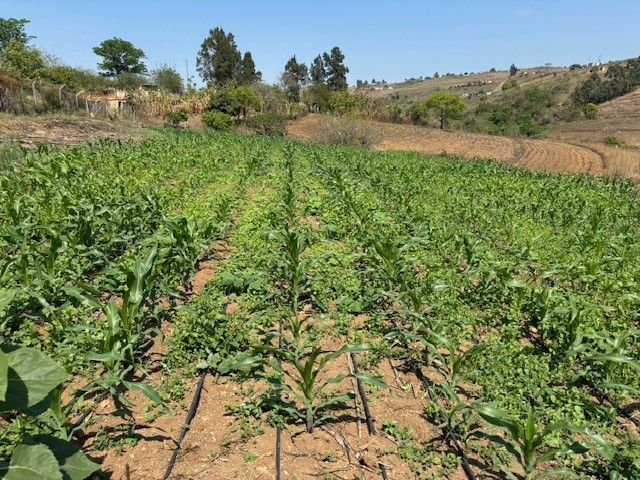
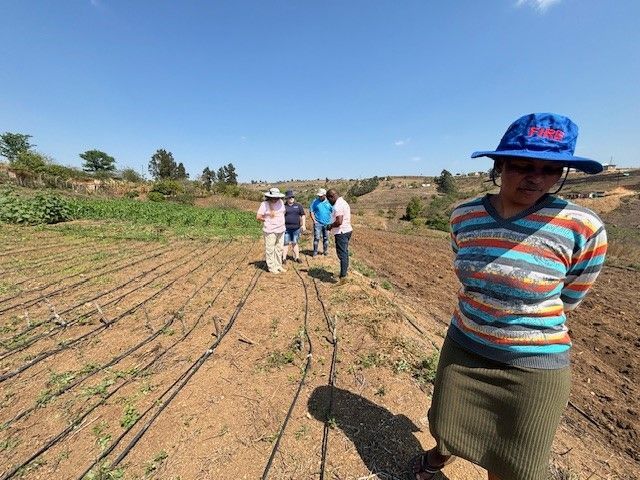
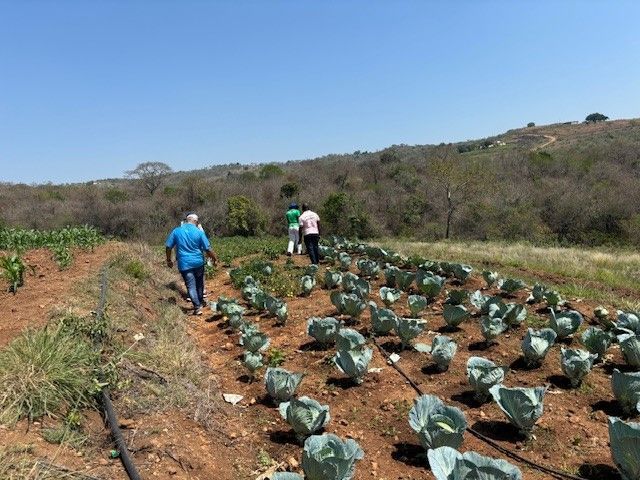
We arrived at the first farm belonging to Nomfundo Vilakati. She was proud to show us her fields and talk about the crops she has grown and how she uses her chicken manure for fertiliser so everything is entirely organic and natural.  She has been struggling with getting water to her farm to irrigate her fields as she is quite high up on the hills and the river is below and she cannot afford a pump to pump the water from the river up the hill to her farm.  At the moment she is trying to capture any run off water from further up the hill but struggles when the weather has been dry for a while.  This means that she has had to rent a piece of land in another part of Eswatini that she is farming as well to ensure that she has a harvest and has crops to sell. 
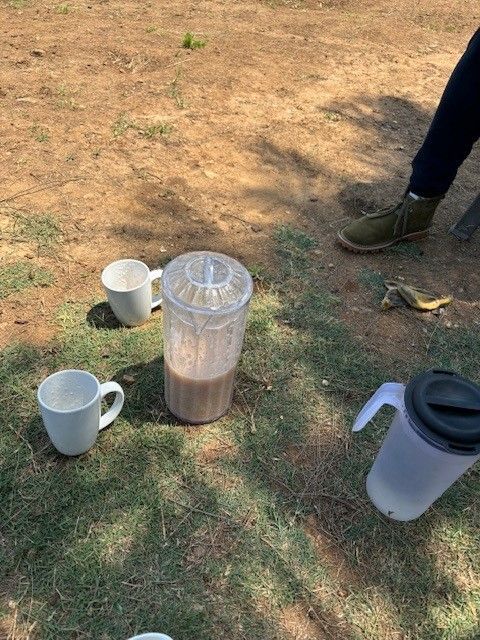
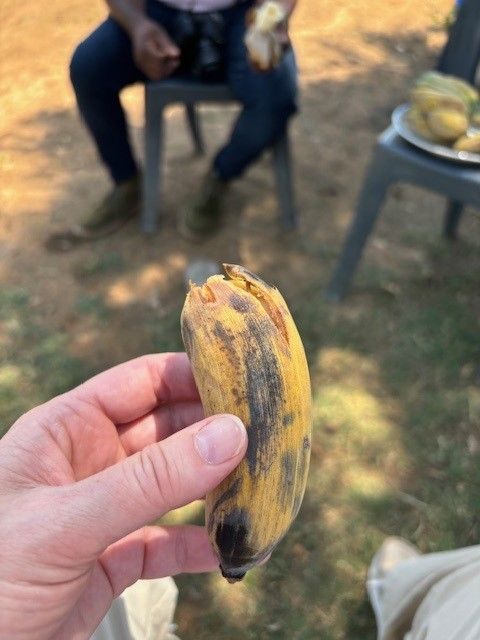
Nomfundo came with us to the next farm we visited belonging to Paulini Mkhatjwa. We learnt that the animals are kept in a kraal (pronounced crawl) at night, this is an enclosure made of upright branches which is also used as a meeting place or social space for the men of the homestead. Paulini is growing lots of crops including maize, tomatoes, green peppers, lettuce, cabbage, onions, coffee, bananas to name but a few.  Her land is on a slope so she has had to make several terraces so that the crops do not wash away when it rains, the hilly terrain mean that many farmers have to do this.  She insisted that we try a drink she made for us all which I can only describe as runny porridge, it doesn’t translate in English. It is made with leftover porridge and fermented fruit and is drank for breakfast and as a snack throughout the day. She served us this with the tiniest sweetest bananas I’ve ever tasted, they were super yummy.
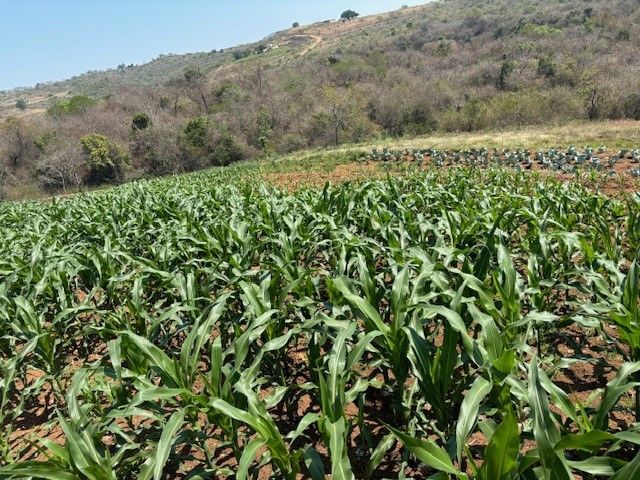
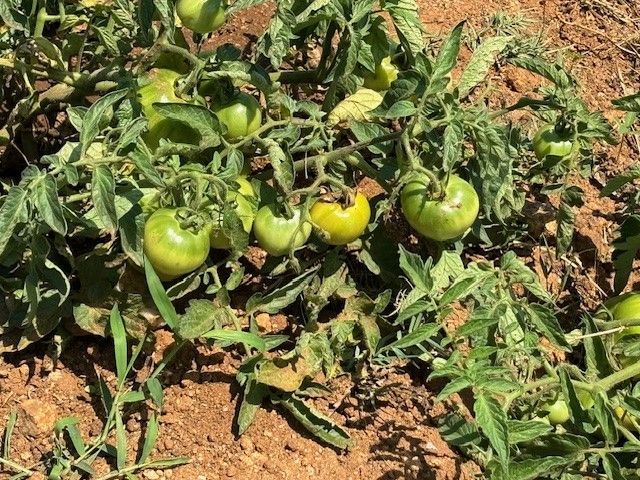
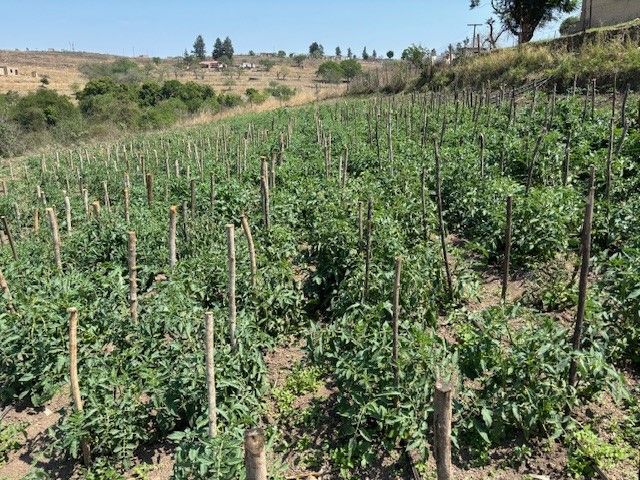
The last visit of the day was with Nomsa Dvuba who is a former finalist in the Woman Farmer of the Year Competition and this was evident when we saw the size and quality of her farm. You can see immediately the methods taught by the experts at the Woman Farmer Foundation training in clear view such as a board at the start of each new crop stating the crop, the date it was planted and the number of seedlings planted and using stakes to encourage the crops to grow upwards. It was clear that Nomsa has grown her farm gradually over the years and she is now very active in her community helping and advising other woman and young farmers. She is hopeful that she will be a finalist again in this years competition.
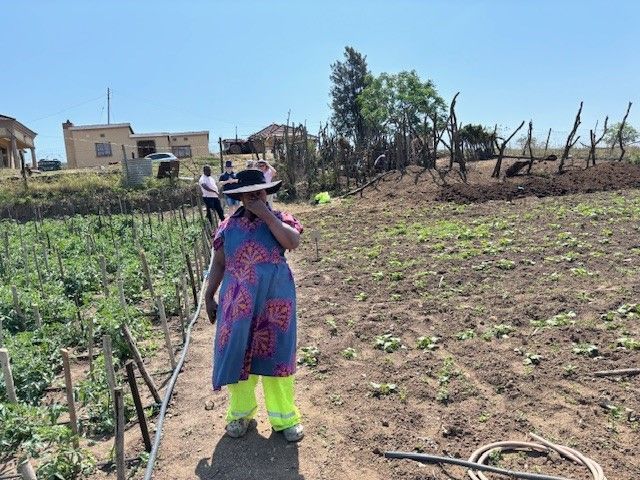
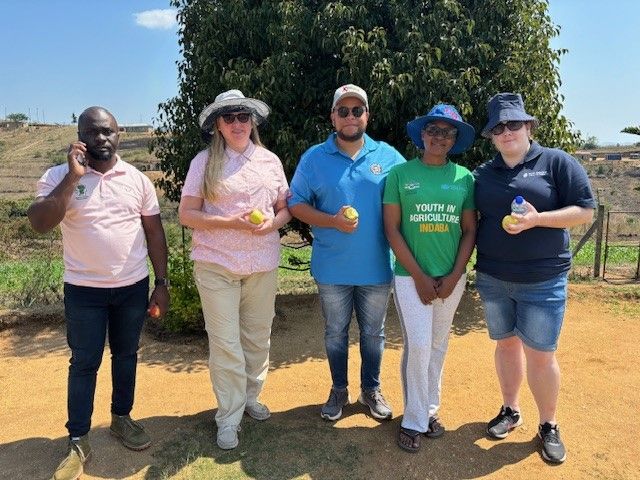
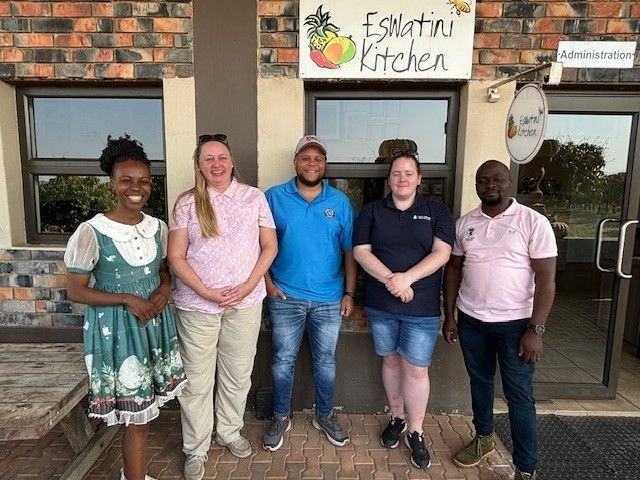
Thank you so much to the Teresa, Nkosinathi and Damian (pictured below) and of course to Carlos and Sonia and the rest of the team in the factory for looking after us so well and giving us an unforgettable experience. Jade, I and the rest of the True Origin team look forward to working with you all more closely in the future.
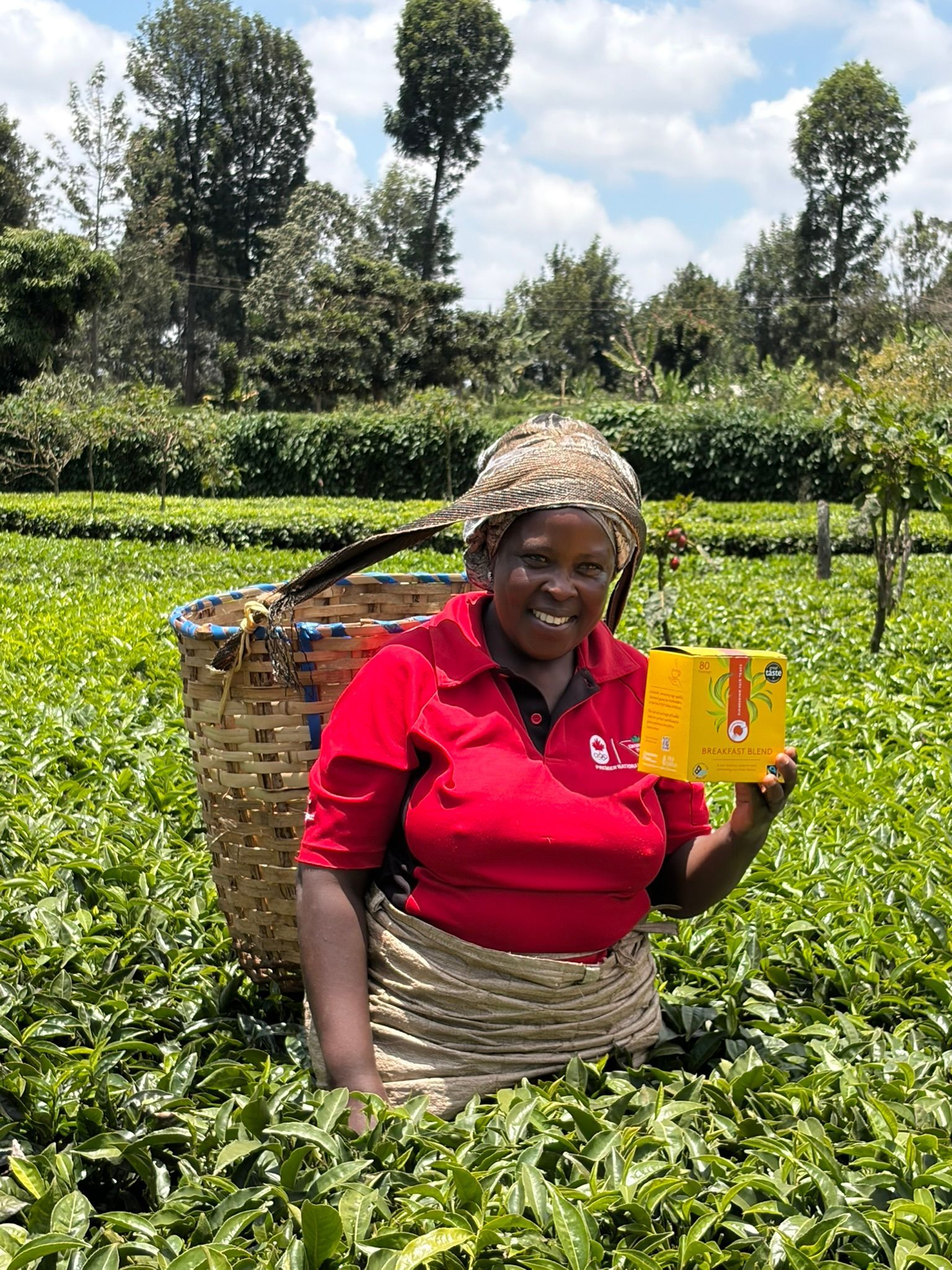
A tea farmer in the Nyeri region of Kenya standing in her tea farm holding a box of Traidcraft Tea
By Tracy Mitchell • September 28, 2026
True Origin's MD, Tracy Mitchell, reflects on her fair trade journey of 30+ years whilst in Kenya visiting some valued Producer Partners at Meru Herbs.
By Angus Coull • September 11, 2026
The unique Kilombero Rice from Malawi is still available to purchase
A loveheart made out of white Kilombero rice from Malawi
By Nicola Taylor • September 9, 2026
An insight into 17 years of partnership between a small fair trade organisation in Paisley and an association of smallholder rice farmers in Northern Malawi
By Angus Coull • September 3, 2026
We are delighted to be shortlisted in the Consumer-Facing Social Enterprise of the Year and the International Impact Award at the UK Social Enterprise Awards 2026. Produced by Social Enterprise UK and Co-operatives UK, the Awards celebrate the leading lights in our sector, showcasing diversity and impact across 15 categories. Social enterprises are businesses that trade for a social or environmental purpose, and reinvest at least half their profits to further that mission. There are more than 100,000 social enterprises in the UK, employing 2.3 million people, and we’re delighted to be recognised as one of the best in this pioneering business movement. Commenting on being a UK Social Enterprise Awards finalist, Tracy Mitchell MD said: “Being shortlisted for not one but two UK Social Enterprise Awards is a huge honour for everyone at True Origin. We are particularly proud that the nominations recognise both sides of what we are trying to achieve: building a successful consumer-facing business here in the UK, while creating meaningful and lasting impact with our producer partners internationally.
By Angus Coull • July 28, 2026
Official recognition for our great tasting fair & fine food products
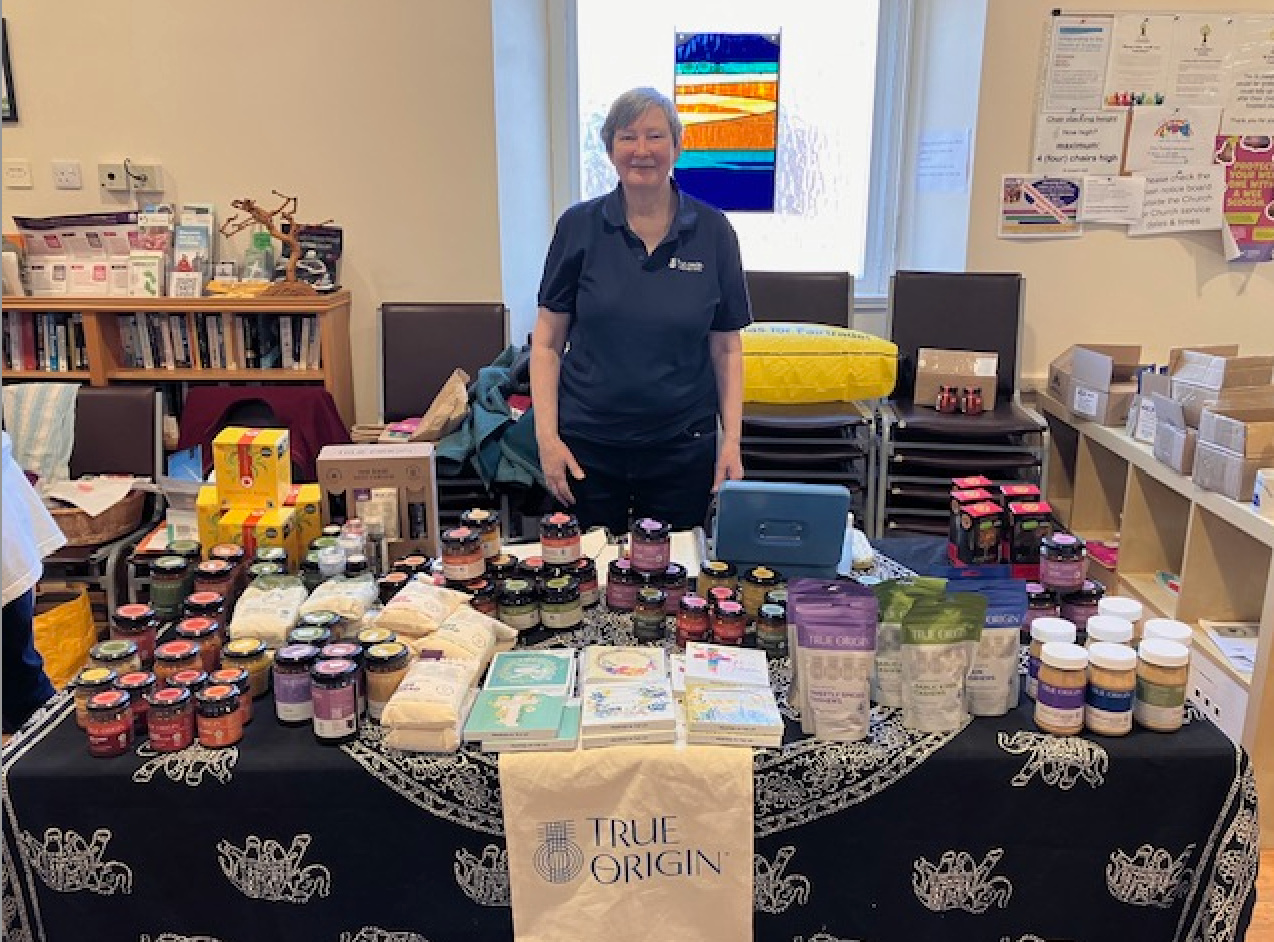
A woman standing at  church fair trade stall with lots of delicious fair trade products available
By Nicola Taylor • July 3, 2026
A Fair Trade stall is about so much more than selling tea, coffee and chocolate. Every purchase supports smallholder farmers and producers who are working incredibly hard to build sustainable livelihoods in the face of climate change, rising fuel costs and an unpredictable global market. For many of the communities we work with, having reliable customers is essential. By running a True Origin stall at your church, you become part of that support network, helping to create regular demand for products that often aren't available in supermarkets or high street shops. Whether your church is passionate about global justice, caring for creation or simply making a practical difference, a Fair Trade stall is a simple but powerful way to turn those values into action. Start Small You don't need a huge team or a large budget to get started. Begin by talking with your church leaders about the idea. Many churches are happy to provide a small loan or donation to purchase initial stock, particularly if it can be repaid gradually as sales grow. Remember that most of the income from a stall is best reinvested into buying more stock rather than raising money for church funds. This helps keep the stall sustainable and ensures producers continue to receive orders. If you're new to running a stall, don't worry, you won't be on your own. The True Origin team and experienced Fair Traders are always happy to share advice and practical tips.
By Angus Coull • July 1, 2026
Assistance from True Origin Partnerships creates positive impact in Eswatini, Kenya and Malawi
By Angus Coull • July 1, 2026
Resilience, Recovery & Renewal - Check out the True Origin Annual Report
By Angus Coull • June 18, 2026
Fair on The Planet is Chapter 2 of the Fairtrade Foundation's Do it Fair Campaign. We are with them!
By Angus Coull • May 15, 2026
Our board member, Karena shares her experience throughout Perth & Kinross